

Image
By Dr. Anton Anderssen
Seven Things You Probably Didn’t Know About Scotland’s National Poet
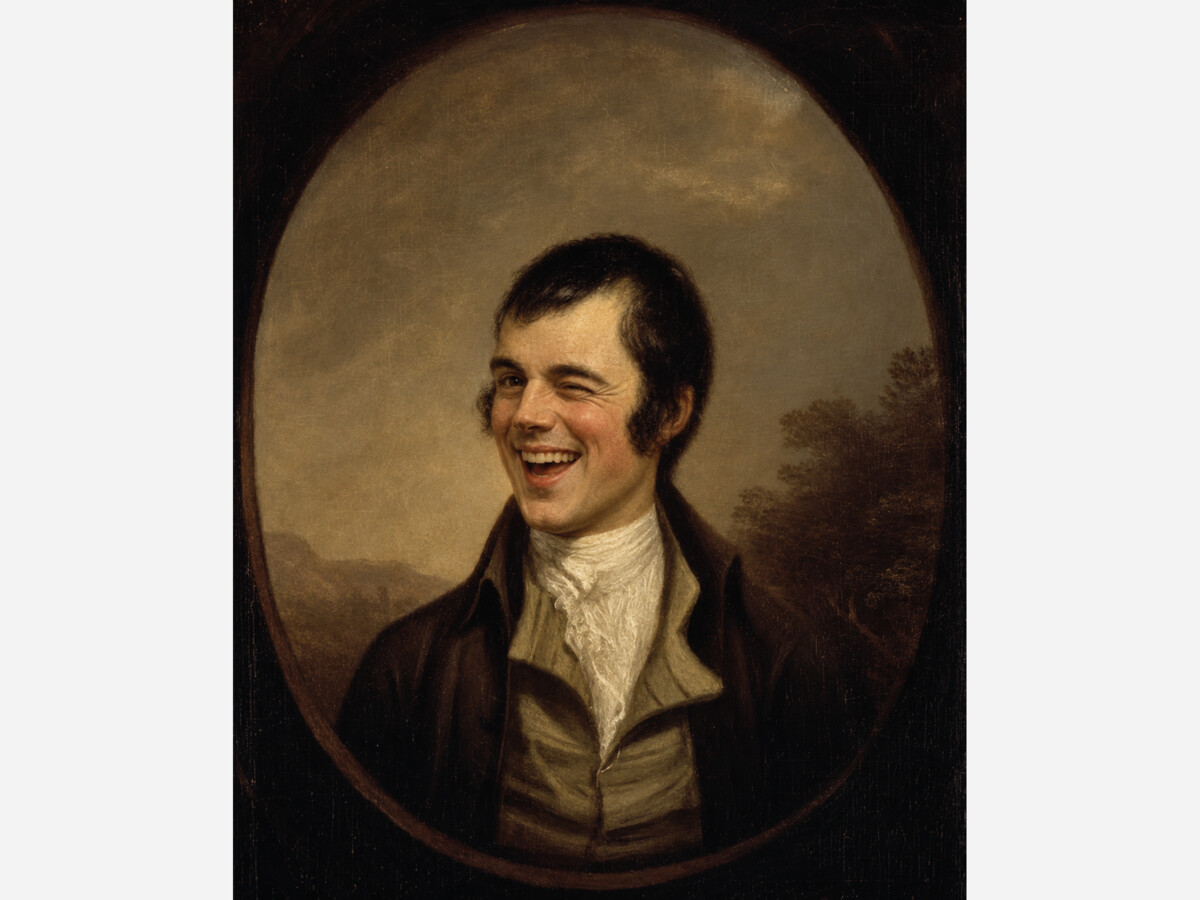
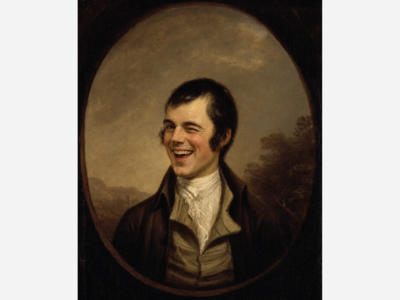
Robert Burns has enjoyed an exceptionally successful passage into respectability. We toast him, recite him and serve dinner in his honour. His portrait presides over an international celebration of Scottish culture.
Beyond the ceremonial portrait lie sexual entanglements, explicit drinking songs, a proposed job on a slave plantation and admirers whose enthusiasm extended to removing his skull.
An affectionate roasting seems overdue. Burns supplied plenty of material; we rarely hear about it at Burns suppers.
1. His proposed Jamaican job included supervising slaves.
In 1786, Burns considered emigrating to Jamaica to work as a plantation bookkeeper. Mossgiel farm was struggling, and he needed a livelihood. His difficulties also included Jean Armour’s pregnancy and her father’s opposition to their marriage.
“Bookkeeper” sounds like a meek appointment involving ledgers. On this plantation, the responsibilities would also have included supervising enslaved people. Jamaica was then a British colony: the title was “bookkeeper,” but the business was slavery. Human Resources could have made the advertisement sound positively clerical.
Research by Stephen Mullen and Craig Lamont, announced by the University of Glasgow in October 2026, identifies one confirmed passage booking: aboard the Bell, scheduled to sail on 17 October 1786. Burns never made the voyage. Professional and familial considerations influenced his cancellation, while publishing offered a more profitable future.
He never took the position, participated in the slave trade or profited from plantation slavery. He did, however, lose money on the unused passage.
Nevertheless, the contemplated career is arresting. The poet later celebrated for human brotherhood had considered a job in which some of the brothers would be somebody else’s property.
2. Clarinda received his passionate letters. Her maid had his child.
While Jean Armour was pregnant with his second set of twins, Burns was exchanging passionate letters with Agnes McLehose, his “Clarinda.” He wrote as “Sylvander,” giving their attachment the advantage of literary names.
The National Trust for Scotland describes their relationship as literary rather than physical. However, his relationship with Jenny Clow, McLehose’s maid, produced a son.
Some men considered themselves too grand even to speak to the staff. Burns took familiarity considerably further. By January 1789, Jenny was seeking support for their child. His romantic life had acquired a legal correspondence of its own.
His relationship with Jean had already generated documentary complications. Their 1786 declaration acknowledged marriage, but her father took it to a lawyer, who mutilated the document. Destroying the paper did not necessarily extinguish a marriage under contemporary Scottish practice. Annulment by scissors was an optimistic approach to family law.
Jean bore twins in September 1786 and another pair in March 1788. The second twins, both girls, died within weeks. The couple’s marriage was formally registered that August.
Jean eventually bore Burns nine children, only three of whom reached adulthood, and helped raise children he fathered with other women. His talent for romantic attachment gave “be fruitful and multiply” the force of a personal commission. Jean was left to attend to the fruits. His descendants now number in the hundreds.
3. The bard of tender love songs also had a filthy repertoire.
Burns could write exquisite declarations of love. He could also supply songs whose interest in the human body was considerably less metaphorical.
He wrote, collected and adapted sexually explicit material involving anatomy, appetite and bodily activity. Readers acquainted only with roses and affectionate farewells may find this Burns unexpectedly vigorous.
Some of that material is associated with The Merry Muses of Caledonia, published anonymously in 1799, three years after his death. Its title page described a collection selected for the use of the Crochallan Fencibles, his Edinburgh drinking club.
Attribution requires care. Burns did not approve the posthumous volume, his precise involvement in its production remains uncertain, and later editions accumulated additional texts. The entire collection cannot responsibly be attributed to him. Authentic examples of his bawdy writing and collecting nevertheless survive.
Only two copies of the 1799 edition are known to survive. One is preserved in the University of South Carolina’s G. Ross Roy Collection. Anyone investigating this side of the national bard can therefore claim, quite truthfully, to be pursuing a scholarly interest.
4. Coca-Cola put him on a bottle, the company that wanted to teach the world to sing.
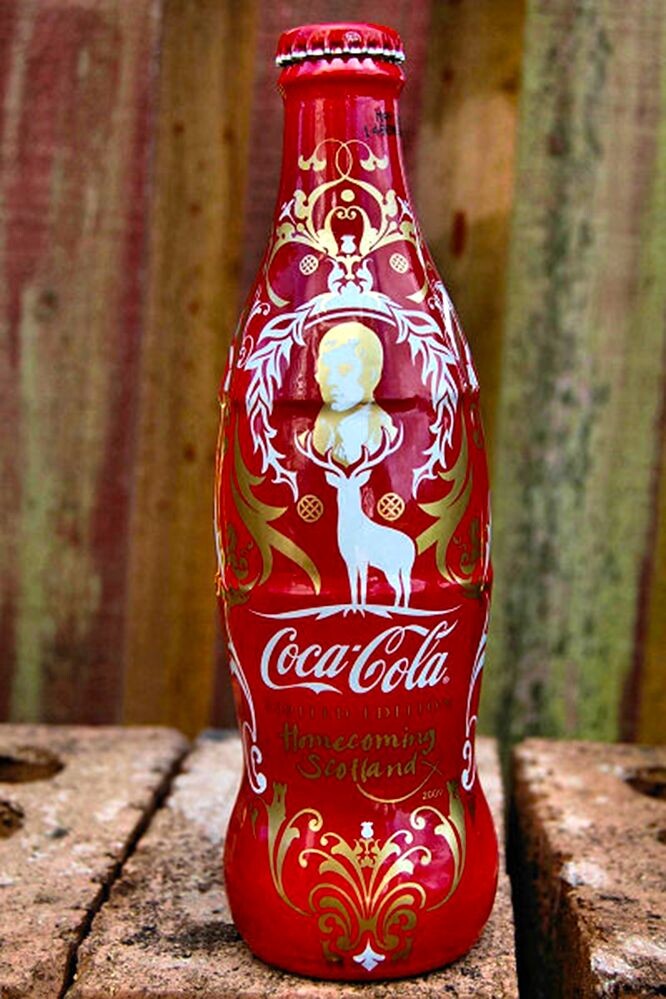
In 2009, Burns acquired an unusual distinction for an eighteenth-century poet: his portrait appeared on a commemorative Coca-Cola bottle.
The edition marked Homecoming Scotland and his 250th birthday. Scotland.org describes him as the first person to appear on a commemorative Coca-Cola bottle. Father Christmas may wish to consult his solicitor.
Coca-Cola’s famous 1971 “Hilltop” advertisement helped produce the hit “I’d Like to Teach the World to Sing.” Decades later, the company put Scotland’s great international singalong figure on its packaging. Understanding what “Auld Lang Syne” means has never been a condition of joining the chorus.
The pairing was inspired. The attribution of his most famous song requires rather more small print.
5. “Auld Lang Syne” was written before Burns was born.
Earlier songs bearing the title and familiar opening sentiment predated Burns’s birth in 1759. He himself presented “Auld Lang Syne” as an old song and told George Thomson that he had taken it down from an old man’s singing.
Burns was quite open about the inheritance. Posterity has occasionally been less attentive.
That does not mean he merely copied the familiar lyrics. Scholars continue to discuss the extent of his contribution, and his transformation of inherited material was central to the song’s worldwide success. Traditional song developed through precisely this kind of collecting, adaptation and renewal.
Its melody supplies another surprise. Burns’s version appeared in the fifth volume of The Scots Musical Museum in 1796, after his death, accompanied by a different tune. Thomson published it with the melody now generally sung in 1799.
The words had ancestors; the familiar musical pairing was published posthumously. The song that seems inseparable from Burns is also a small monument to the work of other people.
6. His supposed adventure supplying cannon to revolutionary France has a serious evidence problem.
A government tax officer sending artillery to French revolutionaries would make a magnificent scandal.
Burns became an exciseman in 1789. In 1792, he participated in the seizure of the smuggling vessel Rosamond. According to a later account, he bought four captured cannon and dispatched them to France, only for Customs to intercept them at Dover.
The seizure is documented. The shipment is another matter.
The cannon story first appeared in John Gibson Lockhart’s 1828 biography, more than thirty years after Burns’s death. Examining the evidence in 2022, Gerard Carruthers and Ralph McLean found no surviving documentary proof that Burns purchased or dispatched the guns. They argued that the narrative was unlikely and suggested that it might have absorbed details from the activities of Professor John Anderson, who really did take ordnance to France in 1791.
Burns’s political conduct attracted official scrutiny. His supposed venture into revolutionary arms supplies remains unproven.
It would certainly help us burn Burns. Unfortunately, an excellent allegation is still not evidence.
7. His admirers removed his skull to investigate his genius.
The strangest encounter with Burns occurred almost thirty-eight years after his death. Literary admirers can have difficulty letting go.
When Jean Armour died in 1834, the mausoleum at Dumfries was opened for her burial. A group took the opportunity to remove Burns’s skull so that a cast could be made. Most admirers would have settled for a luxury leather-bound edition with gilt-edged pages, preferably expensive enough to make reading it seem inadvisable.
Surgeon Archibald Blacklock recorded the examination and the remarkable preservation of the cranial bones. After the work was completed, the skull was enclosed in a lead case and returned to its resting place.
The purpose was phrenology, the pseudoscience that claimed the shape and dimensions of the skull revealed intelligence and character. George Combe subsequently interpreted the cast. Examples remain in museum collections, preserving the curious conviction that the best way to understand a poet’s mind was to measure its packaging.
Burns remains a magnificent poet and a rather less convincing recommendation as a husband. We can admire the verse, enjoy the songs and raise a glass to his genius. Jean Armour might reasonably have preferred a little less genius and considerably less paperwork.


Patchy rain nearby, with a high of 77 and low of 70 degrees. Patchy rain nearby in the morning, light drizzle in the afternoon and evening, patchy rain nearby overnight.