75° and Cloudy
Image



Festivus is not a holiday for the cheerful. It is a holiday for the observant. For the people who notice when systems quietly stop working, when rules become “flexible,” and when someone decides — without asking — that your paid service is actually a shared resource.
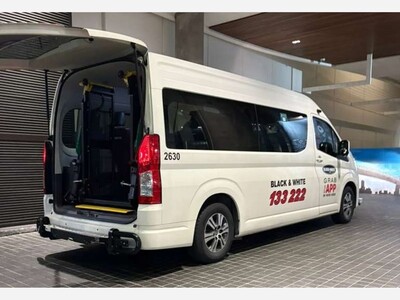
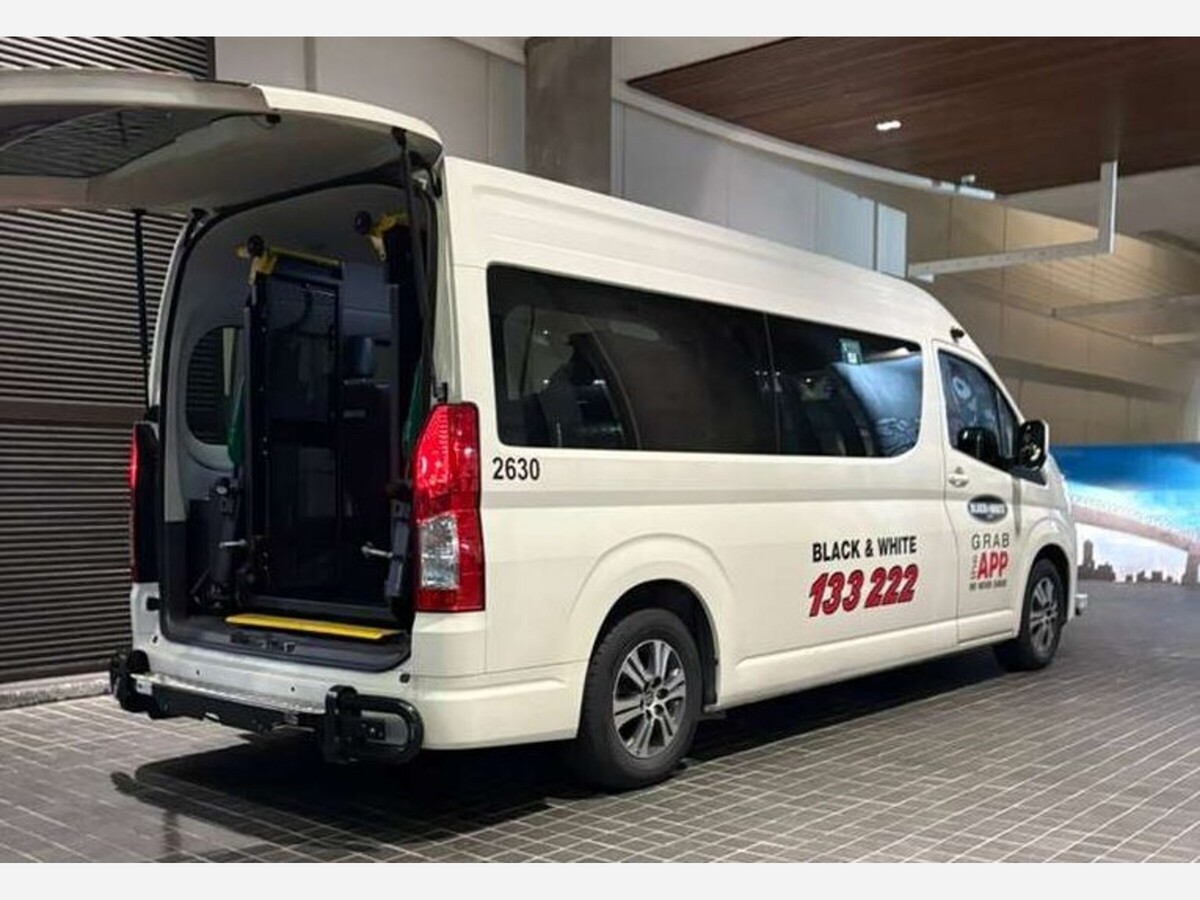
This year, Festivus found me not beside an aluminum pole, but inside an aluminum taxi in Brisbane.
I had hired a taxi in the traditional sense: money exchanged for exclusive transport from Point A to Point B — a radical concept, I know, rooted in centuries of precedent and the small-print expectations of civilization.
My wheelchair and I were already loaded. I was already inside the vehicle. I had already been strapped in, waiting to depart the airport for my hotel.
And then the taxi did not move.
Instead of leaving, the driver began negotiating something with strangers outside the vehicle. I could not hear what was being said. What I could see was that my presence — and my paid hire — were being treated as a bargaining chip in a conversation to which I was not a party.
Without consent.
Without consultation.
Without even the courtesy of pretending this was normal.
He invited additional passengers into the vehicle — strangers — during my paid hire. Not as a request. Not as an option. As a fait accompli.
Thus began the Airing of Grievances.
The Grievance
A taxi, for reasons known only to regulators and philosophers, is not a bus. It is not a hostel. It is not an experimental sociology lab where tourists are mixed like salad greens to maximize yield.
And yet, there I was, watching my private taxi metamorphose into a surprise group project.
Let us be precise, because Festivus demands precision: I observed the driver invite additional passengers. What I did not do — at any point — was consent. I did not agree to a shared ride. I did not authorize a public health experiment. I did not sign up for a side hustle layered on top of my fare.
What appeared to be happening was something economists might politely call “efficiency” and everyone else would call double-dipping: drop me off, then continue onward with the bonus passengers — extracting full value from multiple parties using a single vehicle, a single timeline, and my original booking.
This is where the grievance deepens.
I am a wheelchair user with muscular dystrophy. I am immunocompromised. I do not get to shrug off close contact with strangers in confined spaces as a minor inconvenience. For me, consent is not etiquette — it is risk management.
And yet, the system often assumes that disabled travelers, especially disabled tourists, are pliable. That we are tired. That we want to avoid trouble. That we will accept whatever happens because the alternative feels exhausting.
This assumption is the real grievance.
Because it relies on silence — and on quietly extracting $68.87
from someone who was never asked.
The Pause
Festivus, however, is not merely about complaining. It is about discipline. It is about knowing when not to act.
I did not yell.
I did not argue.
I did not pitch a bitch, start a fight, or engage in interpretive outrage.
Instead, I did something far more unsettling to anyone who cuts corners for a living.
I stayed calm. I asked the driver whether he was attempting to add additional passengers to my taxi ride without my consent.
And that is where the Feats of Strength began.
Feat of Strength #1: Documentation
While others might raise their voices, I raised my phone — discreetly, deliberately, with the quiet confidence of someone who knows that memory fades but metadata does not.
I documented the driver authorization.
I documented the vehicle.
I noted the time.
I observed carefully.
Nothing panics a system built on plausible deniability like clean documentation created by someone who is not emotional, not confused, and not improvising.
Feat of Strength #2: Restraint
Festivus does not reward volume. It rewards timing.
I understood something fundamental: the argument inside the vehicle is never the real argument. The real argument happens later — in writing, with attachments.
Restraint is not weakness. It is deferred force.
Feat of Strength #3: Self-Advocacy Without Performance
Disabled people are often expected to perform gratitude, patience, or inspiration. I declined all three.
I advocated for myself without theatrics. Without apology. Without explaining my worthiness of basic boundaries.
I stated facts.
I asserted consent.
I trusted process — because I understood it.
This is a skill disabled travelers develop not because we want to, but because systems frequently test us.
Feat of Strength #4: Making the System Work Without Yelling
Here is the part that rarely makes it into heroic narratives:
I made the system work quietly.
I exited safely.
I paid my $68.87 fare.
I removed myself from risk.
And then, calmly and methodically, I initiated accountability.
Systems depend on people giving up. On fatigue. On the hope that inconvenience will outweigh principle.
Festivus teaches us otherwise.
Feat of Strength #5: Naming the Pattern
The final Feat of Strength is recognition.
This was not random.
This was not an accident.
This was a calculation based on the belief that a disabled tourist is unlikely to fight back — especially politely.
That belief is incorrect.
I did not wrestle the driver. I wrestled the assumption that I would tolerate being quietly exploited.
The Closing Ritual
Festivus does not end with shouting. It ends with clarity.
The grievance has been aired.
The strength has been demonstrated.
The paper trail exists.
Somewhere, paperwork is now moving — silently, efficiently, with consequences that do not require my presence.
The Festivus pole remains standing.
And this year, Festivus was observed properly.
Because true strength is not about force.
It is about knowing when to wait, when to document, and when to let the system do what it claims it exists to do.
Festivus — for the rest of us.



Overcast, with a high of 78 and low of 72 degrees. Overcast in the morning, light rain during the afternoon, moderate rain during the evening, overcast overnight.