Image



By Anton Anderssen
Don't be fooled.
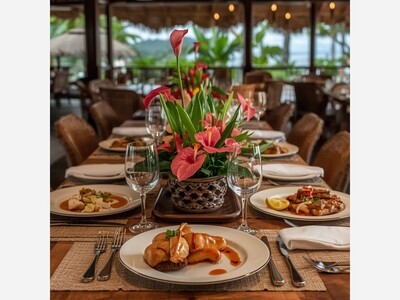
There is no such thing as an “authentic lūʻau” sold by ticket to the public in Hawaiʻi. What exists instead is a commercial fraud: a carefully staged spectacle that borrows the vocabulary of ritual while evacuating it of meaning, obligation, religion, and risk.
Tourists ask where they can buy tickets to a “real” lūʻau. The tourism industry smiles, nods, and sells them a fake—often at hundreds of dollars per head—wrapped in flower leis, buffet lines, and the lie that authenticity is available for purchase.
This is not cultural sharing.
This is cultural counterfeiting. It's a ripoff.
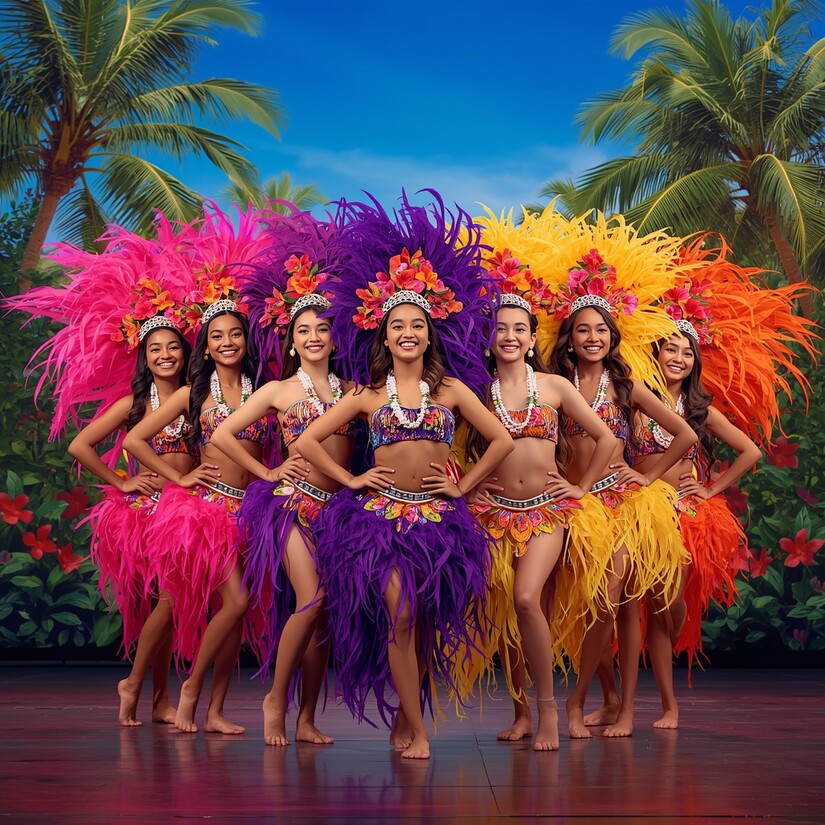
Anthropologically speaking, a lūʻau is a ritualized communal event. Rituals are not defined by aesthetics; they are defined by function.
A real lūʻau:
Marks a life transition or communal obligation
Is invitation-only
Operates inside a known network of relationships
Imposes duties on hosts and guests
A ticketed “lūʻau” does none of this. It is transactional, anonymous, escapable, and consequence-free. You eat, you clap, you leave. No bond is formed. No obligation incurred. Nothing is at stake.
Calling this a lūʻau is not an innocent simplification—it is a categorical lie.
Imagine advertising an “authentic medieval banquet” and delivering:
A fake castle facade
Turkey legs
Costumed actors
A lute soundtrack
A jovial fake lord cracking jokes
No historian would tolerate the claim. No medievalist would accept it. Everyone understands this is themed entertainment, not lived history.
Yet Hawaiʻi’s tourism industry does precisely this—then charges premium prices while marketing the experience as “authentic,” “traditional,” and “real Hawaiian.”
Same fraud. Different costume.
Here is the part the brochures never explain.
Hula, in its original forms, is religious.
Pre-contact hula kahiko was embedded in Hawaiian pagan cosmology: chants invoking gods, ancestors, and elemental forces; ritual preparation; kapu restrictions; performance as offering, not amusement.
This was not “dance.”
It was religious practice. Worship of Polynesian gods.
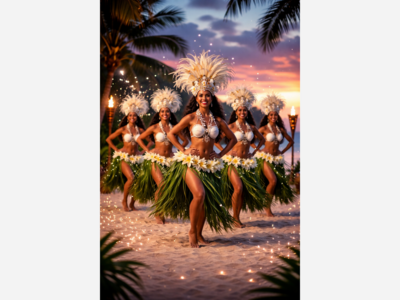
Public “lūʻaus” present a sanitized, de-sacralized, tourist-safe version of hula—carefully edited to remove invocation, obligation, and religious force. What remains is movement without meaning, gesture without consequence.
The industry sells the appearance of tradition while quietly amputating the tradition itself.
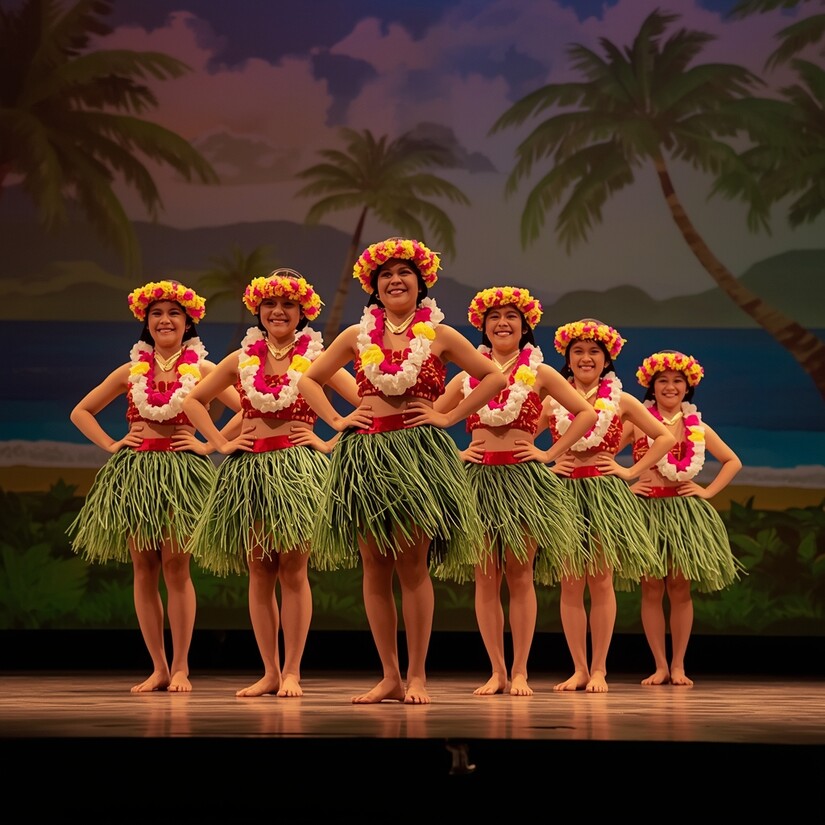
This is not accidental—and it is not a coincidence.
Many Native Hawaiians refuse to participate in commercial lūʻau spectacles precisely because doing so would mock their own culture. Turning ritual into nightly entertainment for strangers with cocktails is not preservation; it is degradation.
So the industry fills stages with performers who are:
Trained
Talented
Often respectful
—but not culturally obligated to the ritual being imitated.
This is how the industry protects itself while maintaining the illusion. The show looks Hawaiian enough to sell, but distant enough to avoid actual cultural accountability.
At the center of all this is the most cynical lie of all: that aloha can be bought.
Aloha is not a feeling.
It is not hospitality theater.
It is not something upgraded with VIP seating.
Aloha is an ethical system—rooted in reciprocity, restraint, and responsibility. Selling it without obligation is not sharing culture; it is extracting value from it while hollowing it out.
This is why the industry works so hard to confuse:
Ritual with entertainment
Culture with spectacle
Authenticity with branding
It must—because the truth would collapse the business model.
Let’s use accurate language.
What is sold to tourists is:
A fake lūʻau
A manufactured spectacle
A commercial scam dressed as heritage
It may be enjoyable. It may be well-produced. It may even be educational in fragments. But it is not—and cannot be—an authentic lūʻau.
Authenticity is not inclusive.
It is not scalable.
And it is not for sale.
When someone asks where to buy tickets to an authentic lūʻau, the truthful response is:
You can’t. Because a lūʻau is not a product.
It is a ritual.
It is relational.
It is bounded.
And it exists whether or not outsiders are invited.
Until Hawaiʻi stops laundering spectacle through the language of ritual, visitors will keep paying for fakes—and believing they’ve touched something real, when all they’ve purchased is a carefully scripted illusion.

Overcast, with a high of 78 and low of 72 degrees. Overcast for the morning, light rain in the afternoon, moderate rain in the evening, overcast overnight.