78° and Cloudy
Image
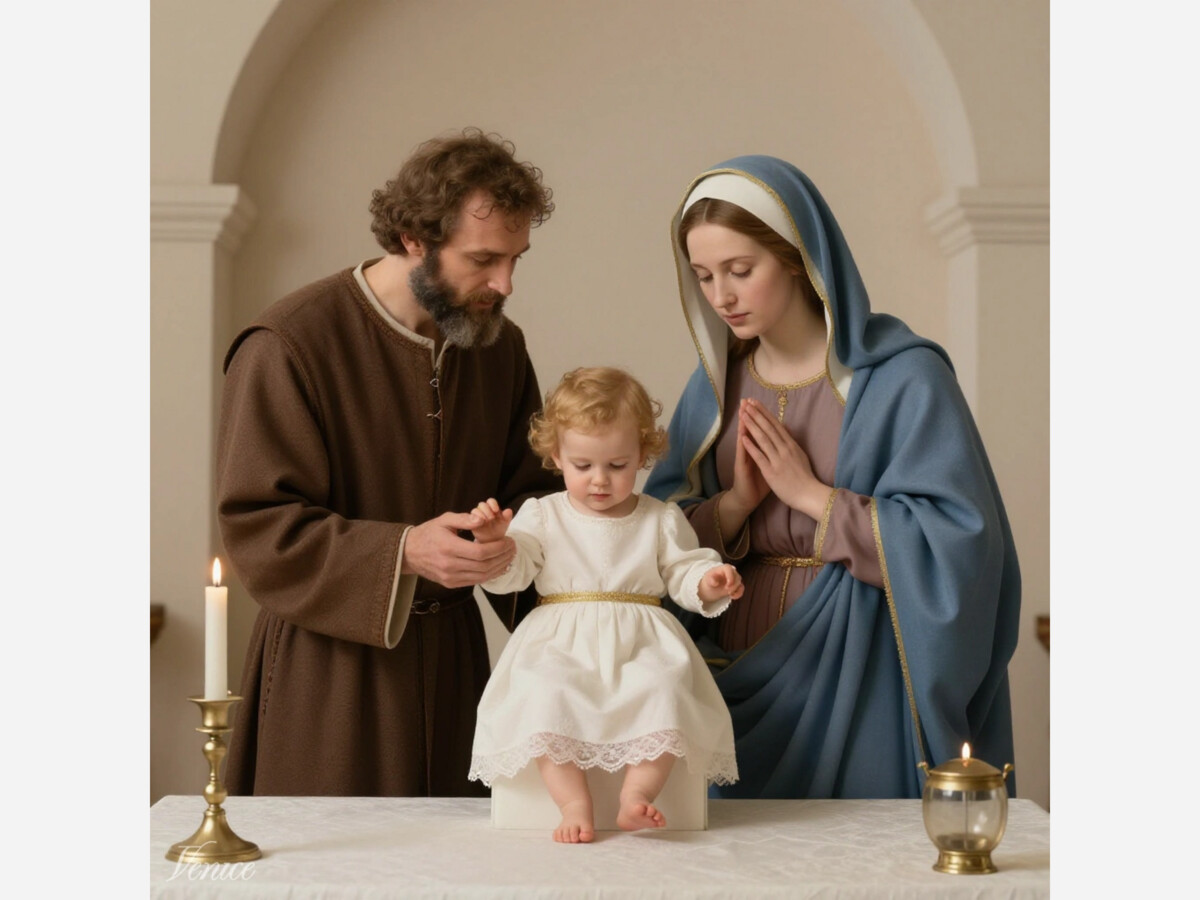



Every year, right after Christmas, the Church invites us to pause, reflect, and gently guilt-trip ourselves with the Feast of the Holy Family—a celebration that presents the household of Jesus, Mary, and Joseph as the “true model of life.”
True model. Universal rollout. No opt-out. No returns.
A brief (and inconvenient) history
Despite feeling as ancient as incense stains, this feast is actually a 19th-century invention, born in Canada and enthusiastically exported (before all the tariffs) until, in 1920, it became mandatory viewing for the entire Church. Originally celebrated on the Sunday after Epiphany, it was later moved closer to Christmas—because nothing pairs with tinsel like moral benchmarking.
Its stated purpose is wholesome: to portray the Holy Family of Nazareth as the ideal from which families may draw “help and comfort.” Which sounds lovely, unless you’ve ever actually been in a family.
The Golden Child problem
In every dysfunctional family, there is a Golden Child—and here, it’s unmistakably Jesus.
Meanwhile, the siblings—mentioned briefly in the Gospels and then promptly forgotten—are left staring into the middle distance like Jan Brady yelling, “Marcia, Marcia, Marcia!”
One imagines family dinners in Nazareth going something like this:
“Yes, James, that’s a very nice clay bowl you made. Now let’s hear again about your brother’s role in creating the universe. Also, James, don’t touch the good plates. Those are for messiahs.”
No one remembers who brought the hummus. Everyone remembers the water turned into wine.
Joseph: emotionally present, narratively absent
Then there’s Joseph, patron saint of men who do everything right and still get written out of the script by chapter three. He is obedient, faithful, hardworking, and silent—so silent, in fact, that he never gets a single recorded line.
Every family has one of these too: the responsible adult who keeps the whole thing running while everyone else argues about destiny, meaning, and prophecy —the one who “steps up” to raise someone else’s miracle.
Mary: the serene overachiever
And Mary—calm, obedient, endlessly patient—sets an impossible standard for parents everywhere. She raises the Son of God, keeps pondering things in her heart, and never once storms out muttering, “I did not sign up for this.”
This is not comfort. This is intimidation.
The question everyone asks (but pretends not to)
Now we come to the part no Opening Prayer ever includes.
At some point—at the well, at a neighbor’s doorway, at a family gathering—someone leans in and asks Mary, quietly but pointedly:
“So… who’s the baby daddy?”
She says “God.” Joseph clears his throat. Someone suddenly remembers they left bread in the oven.
If this is the true model of family life, then gossip, suspicion, and awkward silences are clearly baked into the liturgy.
What the feast accidentally admits
Officially, the Feast of the Holy Family reassures us that holiness can be found in ordinary family life. Unofficially—and far more honestly—it admits that:
Nazareth wasn’t tidy. It was precarious, misunderstood, occasionally scandal-adjacent, and permanently overshadowed by one child’s destiny.
Comfort, at last
So yes, the feast invites us to look to the Holy Family for inspiration – ignoring Gospel of Mark 6:3, “Is not this the carpenter, the son of Mary and brother of James and Joses and Judas and Simon, and are not his sisters here with us?”
If that family—complete with a Golden Child, overlooked siblings, a silent father, whispered gossip, and a backstory nobody knows how to bring up—counts as holy…then the rest of us are doing just fine. The model family works best if you remove all living witnesses.
And somewhere, off to the side, Jan, the middle child —whose name, notably, did not make the Gospels — sister of Jesus, Joses, Judas and Simon grits her teeth.
“Jesus, Jesus, Jesus. It’s always Jesus.”



Overcast, with a high of 78 and low of 73 degrees. Partly Cloudy in the morning, cloudy for the afternoon, overcast for the evening, partly cloudy overnight.